 Collins Asphalt Crack Repair and Sealing
A Simple Way to Block Moisture and Extend Your Driveway’s Life
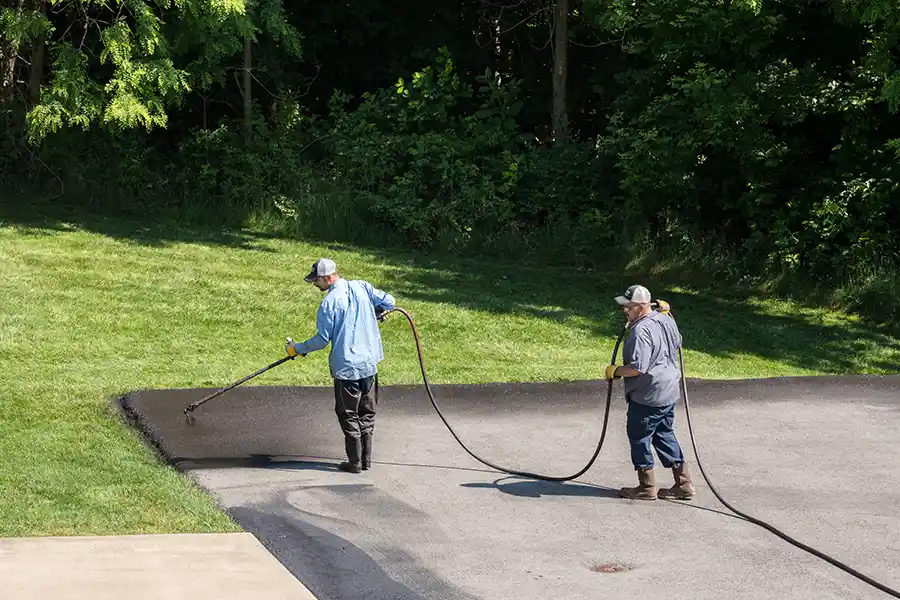
Driveway coating protects against water damage by creating a sealed barrier on the surface of your concrete or asphalt. This barrier stops water from soaking in, filling small cracks, and weakening the base underneath. When water stays out, your driveway is less likely to crack, sink, or crumble over time.
What You Need Before Starting
Before applying driveway coating, you need a clean and dry surface. Dirt, oil stains, and loose debris can stop the coating from sticking well. You will also need the right product for your driveway type, basic cleaning tools, and enough dry weather for proper curing.
Here is what most homeowners should gather:
- Pressure washer or garden hose with strong spray
- Stiff broom or brush
- Concrete crack filler or patch product
- Roller or squeegee made for coating
- Protective gloves and old clothes
Good prep work makes a big difference. If the surface is not clean or dry, the coating may peel or wear out early.
Step-by-Step Process
Applying driveway coating is not complex, but each step matters. Skipping steps often leads to early water damage.
- Clean the surface. Remove dirt, leaves, and debris. Wash away oil spots and let the driveway dry fully.
- Repair cracks. Fill visible cracks and holes. Smooth the repair areas so the surface is even.
- Check the weather. Choose a dry day with mild temperatures. Avoid rain for at least 24 hours.
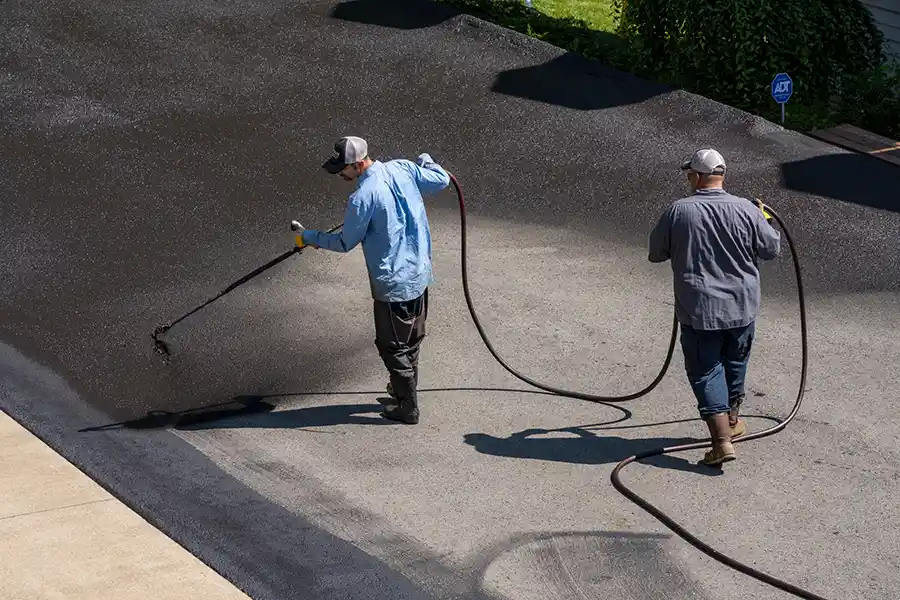
- Apply the coating evenly. Use a roller or squeegee. Spread a thin, even layer across the entire driveway.
- Allow proper drying time. Keep cars and foot traffic off the driveway until it fully cures.
Once cured, the coating forms a shield. Water beads on top instead of soaking in. This reduces freeze-thaw damage, which happens when trapped water expands during cold weather.
Common Mistakes to Avoid
Many water problems happen because of simple mistakes. Knowing what to avoid can save time and money.
- Applying coating over damp concrete
- Skipping crack repairs before sealing
- Using too thick of a layer
- Not coating the entire surface evenly
- Driving on it too soon
Another mistake is waiting too long to apply driveway coating. If your surface already has deep cracks or sinking areas, sealing alone may not fix the issue. Water may already be affecting the base layer below.
When to Call a Professional
Some driveways need more than a fresh coat. If you notice large cracks, crumbling edges, or pooling water, there may be deeper structural concerns. Soft spots or sinking sections are also signs that water has reached the base.
A professional can check:
- Whether the foundation is still stable
- If drainage problems are causing repeated damage
- What type of coating works best for your surface
- Whether resurfacing or repairs are needed first
In some cases, driveway coating is part of a larger plan that may include grading adjustments or drainage improvements. Fixing the source of water flow keeps the surface protected for years.
Final Recommendation
Water is one of the biggest threats to any driveway. It seeps into small cracks, weakens the material, and causes expansion during freezing weather. Over time, this leads to costly repairs.
driveway coating is a smart way to block that moisture before it becomes a problem. When applied at the right time and maintained every few years, it helps extend the life of your driveway and keeps it looking clean.
If you are unsure about the condition of your driveway in Raleigh, NC, we can help check for hidden moisture damage and recommend the right solution. At Collins Asphalt Crack Repair and Sealing, we focus on long-lasting surface protection and proper preparation. Call us at (252) 374-3550 to schedule an assessment and let us help protect your driveway from future water damage.